Dali sits on a high plateau in western Yunnan, wedged between a 4,000-metre mountain range and a lake so wide it looks like an inland sea. It is one of the few places in China where you can ride a bike along a shoreline of fishing villages in the morning, eat Bai-style cheese in a courtyard house at noon, and watch the sun drop behind snow-dusted peaks before dinner. For foreign travelers, Dali is also refreshingly easy: the old town is walkable, English is common in the guesthouse belt, and the pace is slower than almost anywhere else on the standard China circuit.
This guide covers how to get there, where to sleep, what to actually do around the lake, what to eat, and how to plan the three days most people end up wishing they had made five.
Why Dali, and where it fits in a China trip
Dali is the capital of the Bai people, an ethnic group with its own language, architecture, cuisine and festivals. That combination - a genuinely distinct local culture set against an absurdly photogenic landscape - is what separates it from a generic "ancient town" stop.
It pairs naturally with the rest of Yunnan:
- Kunming → Dali: about 2 hours by high-speed train (D-train), the easiest connection in the province.
- Dali → Lijiang: roughly 1.5–2 hours by train, or 2.5 hours by road.
- Dali → Shaxi / Shangri-La: Shaxi is about 2 hours north by car; Shangri-La is a further 3–4 hours.
If you are flying into China for a two-week trip, a Kunming → Dali → Lijiang → Shangri-La arc is one of the strongest routes in the country. If you only have a few days, Dali alone is worth the detour.
Getting to Dali
By air
Dali Airport (DLU) has domestic flights from Kunming, Chengdu, Chongqing, Beijing, Shanghai and Shenzhen. Flights from Kunming are quick but unnecessary given the train. From eastern China, flying to Kunming and continuing by rail is usually cheaper than a direct flight to Dali, and much more comfortable than a long-distance bus.
By train
Dali Railway Station is the main arrival point, about 30 minutes south of the old town by car or DiDi. High-speed trains from Kunming run frequently through the day; book on the official 12306 app with your passport. From Lijiang, trains take around two hours and are the standard way people move between the two cities. If you take an overnight train from Kunming, you will arrive early enough to see the lake before the tour buses show up.
Getting around locally
DiDi (China's ride-hailing app) works normally in Dali, and metered taxis are available but less predictable. For the lake, most travelers use one of three options: rent an electric scooter (typically 50–80 CNY per day), rent an e-bike, or hire a car with a driver for a full loop. Bring your passport when renting - it is the standard deposit document.
Where to stay: four very different bases
Choosing where to sleep in Dali matters more than in most cities, because the "Dali" you experience depends entirely on which side of the lake you wake up on.
- Dali Old Town (Gucheng): the classic choice. Guesthouses in converted Bai courtyard houses, cafés, Western food, easy access to Cangshan. Best for first-timers and anyone who wants to walk everywhere.
- Xizhou: a quieter town 20 km north, famous for well-preserved Bai architecture and its morning market. Best for travelers who want culture over nightlife.
- Shuanglang: on the east shore, with the best sunsets and the most photogenic guesthouses - and prices to match. Best for couples and photographers.
- Caicun and the lakeside strip: the middle ground, a short scooter ride from the old town, with lake views at lower prices.
Book ahead for Chinese public holidays - Mid-Autumn, National Day (early October) and the Lunar New Year flood the lake towns, and prices can double or triple.
The Erhai Lake loop
The ring road around Erhai Lake runs roughly 130 km, and doing it - in a day or over two - is the single best thing to do in Dali. The loop passes fishing villages, wetlands, small temples and viewpoints that range from polished to completely unmarked.
- Scooter or e-bike: the most fun option, but be realistic. A standard e-bike will not complete the full loop on one charge. Plan a half-loop per day, or pick a scooter with a long-range battery and confirm the range with the rental shop.
- Car with driver: around 400–600 CNY for a full-day loop; the driver will know the viewpoints and photo stops.
- Public bus and shared bikes: cheap but slow, and only practical for short lake-side hops.
Highlights along the way include the Xizhou market, the wetlands at Haishe Park, the small peninsula town of Shuanglang, and the quieter northeast shore where the crowds thin out completely.
Things to do beyond the lake
Three Pagodas and Chongsheng Temple
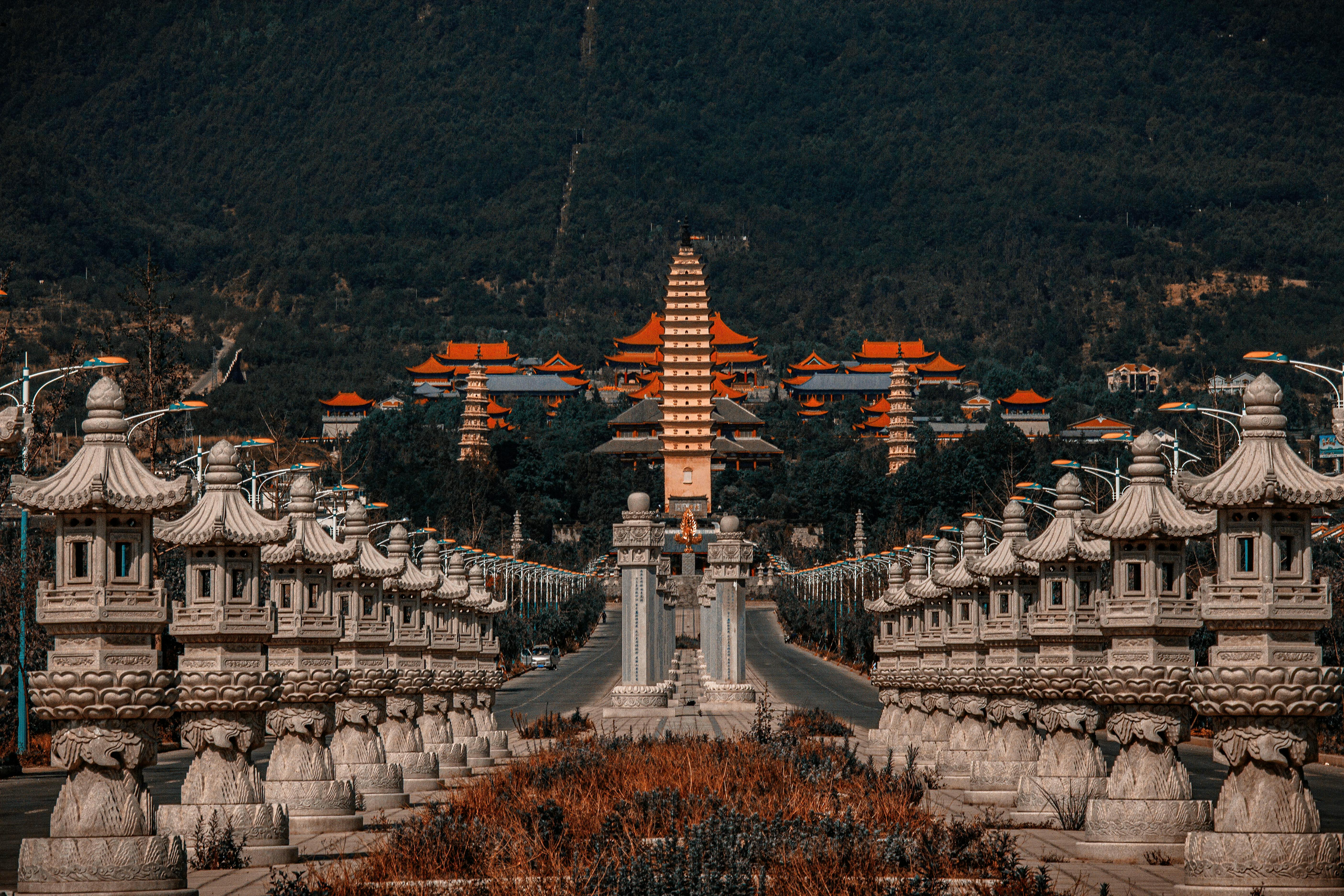
The Three Pagodas are Dali's emblem: one tall central tower flanked by two smaller ones, standing in front of a large restored temple complex with Cangshan rising behind. Go early - the light is best and the tour groups arrive mid-morning. The complex is a short walk or scooter ride north of the old town.
Cangshan cable car
The Cangshan range rises steeply behind the old town and reaches over 4,000 metres. Several cable cars climb different sections; the Zhonghe cable car is the most popular, and a walking trail along the mountainside connects viewpoints and waterfalls. Bring a layer - it is genuinely cold at altitude even when the old town is warm, and the weather can close in quickly.
Dali Old Town itself
The old town is compact, with a grid of stone lanes, a main shopping street, several gates and towers, and a number of small temples. It is touristy, but still lived-in: locals do their shopping alongside visitors. The best experience is early morning before the shops open, or after dark when the crowds thin.
Xizhou and the Bai villages
Xizhou is the place to see Bai architecture properly - whitewashed walls, painted eaves, elaborate gateways and interior courtyards. Several courtyard houses are open to visitors, and the daily market is one of the most authentic in the region. Nearby Zhoucheng is known for tie-dye textiles, where you can watch the indigo dyeing process and buy directly from the workshops.
Shaxi, if you have an extra day
Two hours north, Shaxi is a beautifully restored Tea Horse Road town that has kept its scale and quiet. If Dali feels too busy, Shaxi is the answer - and it can be combined with a longer route up to Lijiang or Shangri-La.
What to eat in Dali
Bai cuisine is one of the most distinctive in China, and Dali is the only place to try it properly.
- Rushan (乳扇): stretched cow's-milk cheese, grilled on a skewer or fried, often served with rose jam. Dali's signature snack.
- Erkuai (饵块): rice cakes, grilled or stir-fried, a Yunnan breakfast staple.
- Xidoufen (稀豆粉): a warm yellow pea porridge, usually eaten with fried dough and chilli oil.
- Bai-style fish and hotpot: freshwater fish from Erhai, cooked with herbs and sour citrus notes rather than heavy chilli.
- Three-course tea (白族三道茶): a Bai welcome ritual - bitter, sweet, then lingering. Worth doing once at a cultural performance or a guesthouse.
Yangren Street ("Foreigner Street") in the old town is the café and Western-food belt; the surrounding lanes have better and cheaper local food.
When to go
- March to May: the best window. Mild, dry, wildflowers on the mountain, clear lake views.
- September to November: dry and clear, with crisp autumn light - excellent for photography.
- June to August: the rainy season; the lake and mountains are green and lush, but afternoons can bring heavy rain, and it is peak domestic holiday season.
- December to February: cold at night, quiet, cheap, and the clearest mountain views of the year. Daytime temperatures are still pleasant.
Dali sits at around 2,000 metres. Altitude is rarely an issue in the old town, but you will notice it on the mountain.
Practical tips for foreign travelers
- Payments: Alipay and WeChat Pay both work and take international cards - set up either app before you arrive. Cash is accepted but increasingly inconvenient.
- Connectivity: you will need a local SIM or eSIM with a data plan; much of the lake has good mobile coverage, though signal drops in the mountain villages.
- Language: English is common in old-town guesthouses and cafés; less so around the lake and in the markets. Translation apps and a few Chinese phrases go a long way.
- Transport booking: buy train tickets on the official 12306 app with your passport, and book a few days ahead for weekends and holidays.
- Etiquette: many Bai village temples and courtyards are private or semi-private. Ask before photographing people indoors, and dress respectfully at religious sites.
A simple three-day plan
Day 1: Arrive, settle into the old town, walk the lanes, visit the gates and small temples, eat rushan and Bai hotpot, sleep early.
Day 2: Cangshan cable car in the morning for the mountain trail and the view down over the lake, Three Pagodas and Chongsheng Temple in the afternoon, old town after dark.
Day 3: Erhai Lake loop - rent a scooter or car and head north to Xizhou for the market and the courtyard houses, continue to Shuanglang for lunch and the sunset, and return via the west shore.
If you can stretch to five days, add Shaxi, and add a full second day on the lake to cover the quieter northeast shore without rushing.
Dali rewards slowing down. The lake is the postcard, but the reason people keep coming back is the rhythm of the place: markets in the morning, mountain shade in the afternoon, and a courtyard dinner at night.