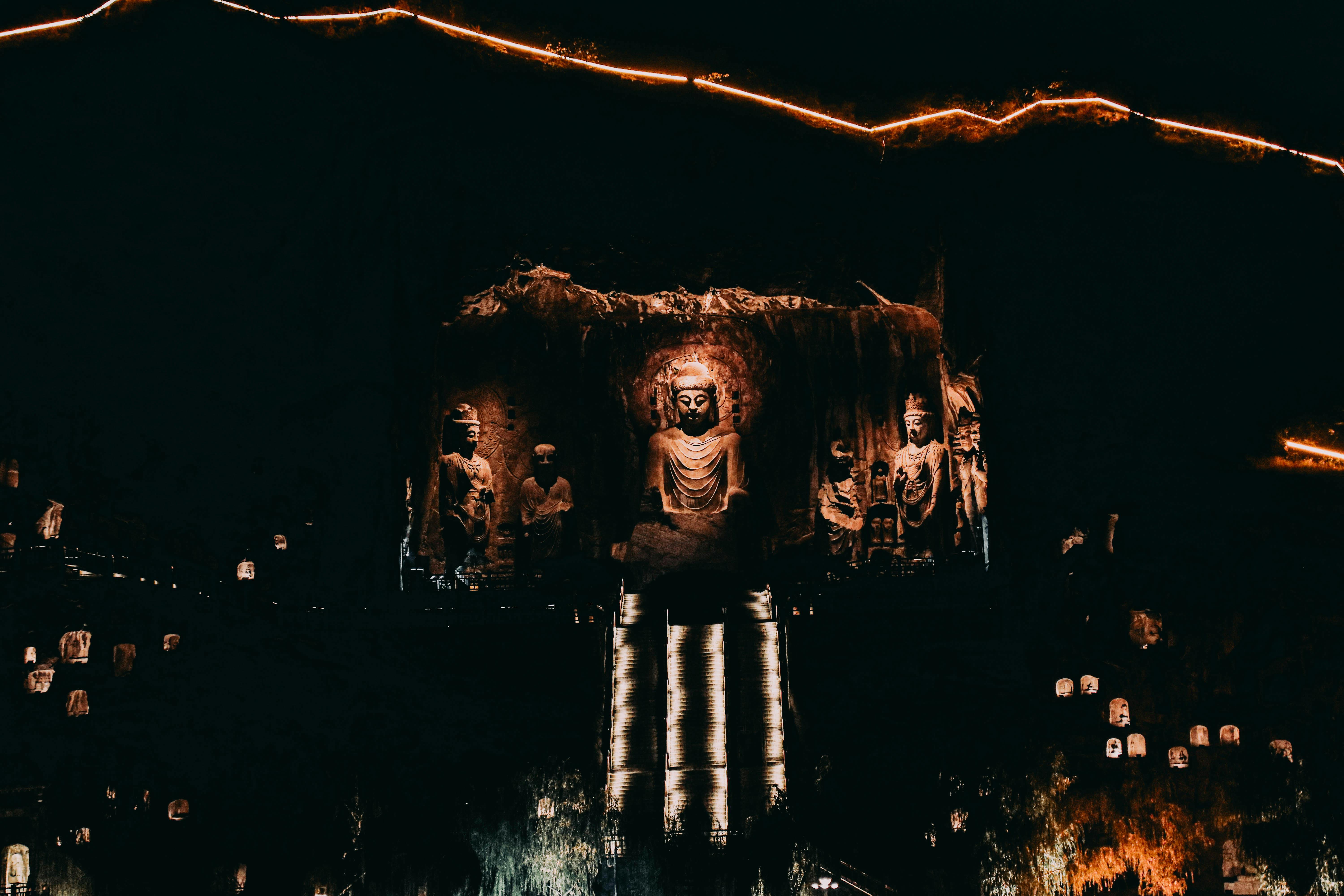
Henan is the cradle of Chinese civilization — literally. The Yellow River watered this land and made it the birthplace of more than 3,000 years of Chinese history. Luoyang served as the capital of nine dynasties, the Shaolin Temple carried kung fu to the world, and the Longmen Grottoes hold roughly 100,000 Buddhist statues carved into limestone cliffs. Kaifeng's Qingming Riverside Landscape Garden re-creates Song-dynasty street life, while Zhengzhou's modern skyline tells a completely different story. Henan is not a polished resort destination — it is raw, real and deeply Chinese.
Why Visit Henan
If you want to understand where China comes from, you go to Henan. This is the Central Plain (Zhongyuan) where Chinese writing, philosophy and dynastic politics took shape. For foreign travelers it is one of the most rewarding regions in the country: world-class UNESCO sites, living Buddhist heritage, martial arts that need no translation, and street food that most tourists never taste. It is also refreshingly free of the international crowds that fill Beijing and Shanghai.
Best Time to Visit
September to November is the sweet spot — clear skies, comfortable 15–25°C days and golden autumn color on Mount Song. April and May are also pleasant, with peonies blooming in Luoyang (the city's famous Peony Festival peaks mid-April to early May). Summer (June–August) is hot and humid with heavy rain, and winter (December–February) is cold and dry but quiet, with far fewer visitors and cheaper hotels.
Getting There
Zhengzhou is the gateway and one of the best-connected transport hubs in China. Zhengzhou Xinzheng International Airport (CGO) has direct flights from Beijing, Shanghai, Guangzhou and Hong Kong, plus international links. But most travelers arrive by rail: Zhengzhou East Station sits on the main Beijing–Guangzhou high-speed line, so you can reach Zhengzhou in about 2.5–3 hours from Beijing, 2 hours from Xi'an, 4 hours from Shanghai and 6 hours from Hong Kong West Kowloon. Luoyang is only 40 minutes further by high-speed train. If this is your first time on the network, start with our guide to China's high-speed rail.
Luoyang: Grottoes, Temples and a Water Banquet
Luoyang is the historic heart of Henan and the reason most people come. The Longmen Grottoes, a UNESCO World Heritage Site, stretch for a kilometer along the Yi River, with more than 2,300 caves and niches carved between the 5th and 8th centuries. The star is the 17-meter Vairocana Buddha in Fengxian Temple. Go early in the morning or late in the afternoon for softer light and thinner crowds; allow three to four hours.
In town, the White Horse Temple is regarded as China's first Buddhist temple, founded in 68 AD, and remains an active monastery with a peaceful, shaded courtyard. In the evening, try the famous Luoyang water banquet — a ceremonious set of 24 soups served in courses, originally created for Empress Wu Zetian. It is soupy, comforting and unlike anything else in China.
Dengfeng & the Shaolin Temple
An hour southeast of Luoyang, the Shaolin Temple on Mount Song is the birthplace of Zen Buddhism and of Shaolin kung fu. Watch the monk martial-arts demonstration, walk the tranquil Pagoda Forest with its 240 brick-and-stone pagodas, and visit the caves where Bodhidharma is said to have meditated for nine years. Arrive by 8:00 am to beat the tour buses. If you have time, the Songshan Scenic Area adds dramatic mountain hiking.
Kaifeng: A Walk Through the Song Dynasty
Kaifeng was the thriving capital of the Northern Song dynasty, and it still feels like it. The Qingming Riverside Landscape Garden is a full-scale re-creation of the 12th-century scroll painting "Along the River During Qingming," with performers in Song costume, boats, and nightly shows. Nearby, the 11th-century Iron Pagoda is one of the oldest surviving structures in China. After dark, the Kaifeng night market is the city's beating heart — dozens of stalls selling grilled skewers, fried dumplings and sweet treats for a few yuan.
Zhengzhou: Modern Capital, Deep History
Don't skip Zhengzhou. The Henan Museum is one of the finest in China, home to oracle bones, bronze ritual vessels and a 9,000-year-old bone flute. The futuristic CBD skywalk and the "Big Corn" tower offer a striking contrast to the region's ancient sites and are best photographed at night.
A 3-Day Henan Itinerary
- Day 1 — Luoyang: Morning at the Longmen Grottoes, afternoon at the White Horse Temple, and a Luoyang water banquet dinner.
- Day 2 — Shaolin & the city: Travel to Dengfeng for the Shaolin Temple and Pagoda Forest, then continue to Zhengzhou for the Henan Museum and the CBD skywalk.
- Day 3 — Kaifeng: Qingming Riverside Landscape Garden, the Iron Pagoda, and an evening of street food at the Kaifeng night market.
What to Eat in Henan
Henan food is hearty, wheat-based and inexpensive. Look for Luoyang water banquet soups, Kaifeng xiaolong bao and night-market skewers, hui mian (braised noodles in a rich lamb broth), hulatang (a peppery beef-and-pepper soup eaten at breakfast) and daokou roast chicken. Vegetarians should ask for sucai dishes; as everywhere in China, showing a translation app helps enormously.
Practical Tips for Foreign Travelers
Payments are almost entirely mobile — set up Alipay or WeChat Pay before you arrive, as many stalls and temples are cashless. Get a local eSIM for data, use Didi for short hops, and book trains and hotels through Ctrip or Trip.com. Most nationalities can currently enter visa-free or via transit without a visa — check the latest rules in our visa-free transit guide, and budget with our China travel cost breakdown.
Henan rewards the curious traveler. Come for the kung fu and the Buddhas, and leave with a deeper sense of the country behind the postcard sights.