There are mountains, and then there is Huangshan (黄山, Yellow Mountain) — the place that gave Chinese landscape painting its soul. For over a thousand years, poets and painters have tried to capture its granite peaks, twisted pines, and the rolling sea of clouds that swallows the summits at dawn. In 2026, it remains one of the most spectacular — and most rewarding — natural destinations in China for foreign travelers.
This guide covers everything you need to plan a Huangshan trip: the best hiking routes, which cable cars to take, where to watch the sunrise, how to get there by high-speed rail, and the ancient villages you shouldn't miss at the mountain's base.
Why Huangshan Belongs on Your China Itinerary
Huangshan is a UNESCO World Heritage Site and one of China's most famous mountains, for good reason:
- Iconic scenery — 72 named peaks, with the three great ones (Lotus Peak, Bright Summit, Celestial Capital) rising above 1,800 meters
- The sea of clouds — on roughly 200 days a year, cloud layers fill the valleys below the peaks, creating the floating-island effect you see in paintings
- Strange pines — gnarled pine trees clinging to sheer cliffs, some over 1,000 years old
- Hot springs — natural hot springs at the base, a perfect post-hike soak
- UNESCO villages nearby — Hongcun and Xidi, two of China's best-preserved ancient villages, sit just an hour away
Unlike steep climbs elsewhere, Huangshan is designed for all fitness levels: modern cable cars carry you most of the way up, and the summit trails are well-paved stone walkways.
Best Time to Visit Huangshan
- Spring (April–May): fresh greenery, azalea blossoms, and moderate crowds — a good balance of weather and visibility.
- Summer (June–August): lush and warm, but this is the rainy season; cloud sea and rainbows are common, yet visibility can drop. Also the busiest time for domestic tourists.
- Autumn (September–November): the golden season. Clear skies, crisp air, and red-and-gold foliage. Best chance of a clear sunrise.
- Winter (December–February): rime ice turns the pines into crystal sculptures — magical, but trails can be icy and temperatures drop below freezing. Fewer crowds and cheaper mountain hotels.
For the classic sea of clouds + sunrise experience, plan for late autumn or early winter, and check the forecast — you want a clear morning after rain, when the clouds are thickest.
How to Get to Huangshan
Huangshan has its own airport (Tunxi International Airport, code TXN) with direct flights from Shanghai, Beijing, and Guangzhou. But for most travelers, the high-speed rail is the smarter option.
Huangshan North Station (黄山北站) is a major stop on the Shanghai–Kunming high-speed line:
- From Shanghai: about 2.5–3 hours on the bullet train
- From Hangzhou: about 1.5 hours
- From Beijing: about 5–6 hours
From the station, take the bus or taxi to the Tangkou scenic area (汤口) at the mountain's southern base — roughly 50 minutes. New to China's rail system? Our complete high-speed rail guide for foreigners walks you through booking tickets and riding like a local.
Planning Your Ascent: Cable Cars vs. Hiking
Huangshan has four cable car routes. Most first-time visitors use the two main ones from the southern base:
- Yungu (Cloud Valley) Cable Car — up to the eastern area near White Goose Ridge; a quick way to reach the summit
- Yuping (Jade Screen) Cable Car — the classic route up to the Jade Screen Pavilion area, near the famous Welcoming Pine
For a first visit, a smart plan: take a cable car up one side, hike the summit circuit (about 2–3 hours at a relaxed pace), and take a different cable car down. Serious hikers can climb the 3-hour stone stairs from the base, but be honest about your fitness — it's steep.
Top Sights on the Mountain
- Welcoming Pine (Yingke Song) — Huangshan's most famous pine, leaning over the trail near Jade Screen Pavilion. Over 800 years old and the symbol of the mountain.
- Bright Summit (Guangming Ding) — the second-highest peak and the best sunrise viewpoint; most visitors stay overnight nearby to catch it.
- Lotus Peak (Lianhua Feng) — the highest open peak (1,864 m), with a thrilling narrow ridgeline. Closed during high wind or winter ice.
- West Sea Grand Canyon (Xihai Da Xiagu) — a spectacular loop of cliff-hugging walkways; the cable-car section saves you the climb back. Allow half a day.
- Flying-over Rock — a boulder balanced impossibly on a cliff edge, a favorite photo stop.
Staying Overnight: Catch the Sunrise
The single best piece of advice: sleep on the mountain. Sunrise over the sea of clouds is the defining Huangshan experience, and it only happens in the early morning.
There are a handful of summit hotels (including the famous Beihai and Xihai hotels). They're basic by city standards and pricey — but they make the sunrise possible. Book well in advance, especially in autumn and during Chinese holidays. On a budget? A dorm bed is a common backpacker option; bring warm layers, as summit temperatures run 8–10°C colder than the base.
If summit hotels are full, staying in Tangkou and taking the first cable car up (around 6:00–6:30 AM) works too — you'll just miss the pre-dawn sky.
Don't Skip the Villages: Hongcun & Xidi
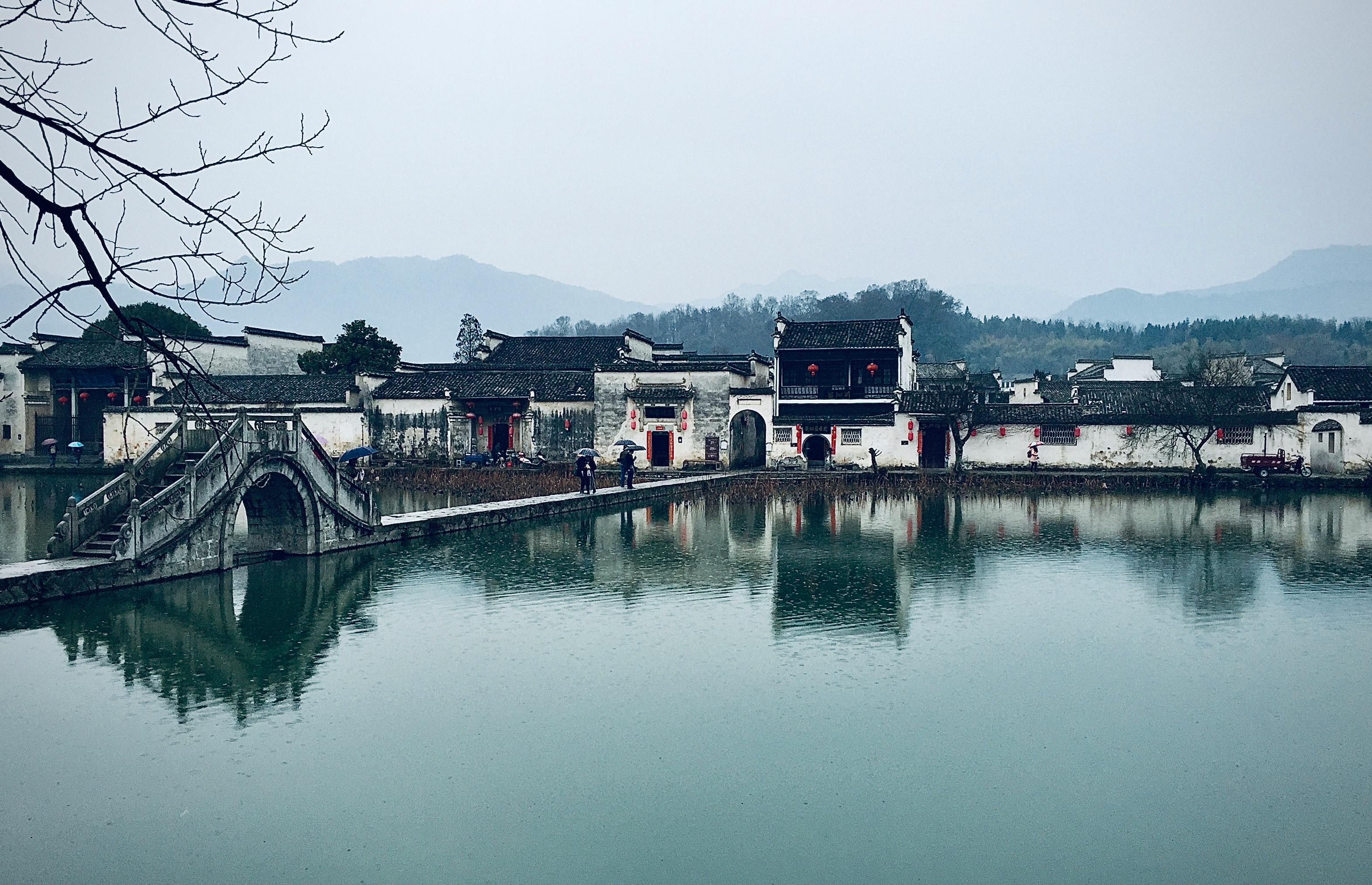
Half the magic of Huangshan is at its base. Hongcun (宏村) and Xidi (西递), both UNESCO-listed, are classic Huizhou-style villages with white walls, black-tiled roofs, and reflecting ponds. Hongcun's Moon Pond is the most photographed spot in the region and appeared in Crouching Tiger, Hidden Dragon.
Both are about an hour from the mountain. A common itinerary: hike the mountain one day, then spend a relaxed half-day in Hongcun — wander the waterways, try local huizhou cuisine (stinky mandarin fish and hairy tofu — braver than it sounds), and photograph the reflections. Tunxi Old Street in the city is also worth an evening stroll for snacks and souvenirs.
Practical Tips for Foreign Travelers
- Payments: ticket offices, hotels, and even mountain vending machines are cashless. Set up Alipay before you arrive — it works with international cards and is accepted everywhere.
- Connectivity: signal is good on the summit, but an eSIM or travel SIM keeps you online from landing for maps, tickets, and translation.
- Tickets: buy entrance + cable car tickets online in advance via the official Huangshan Tourism account or your hotel to skip the queue — peak-season tickets can sell out.
- Pack light: the summit is cold and windy even in summer; bring layers, a rain jacket, and sturdy shoes. Leave big luggage at your hotel in Tangkou or Tunxi.
- Avoid Chinese holidays: Golden Week (early October) and Labor Day (early May) turn the trails into queues. Go midweek in autumn if you can.
Suggested 2-Day Itinerary
- Day 1: High-speed rail to Huangshan North → bus to Tangkou → Yungu cable car up → hike the summit circuit (Welcoming Pine, Flying-over Rock) → sunset at Bright Summit → overnight in a mountain hotel.
- Day 2: Sunrise over the sea of clouds → West Sea Grand Canyon loop → Yuping cable car down → afternoon in Hongcun → evening train back to Shanghai or Hangzhou.
Final Thoughts
Huangshan is the mountain that inspired the very idea of Chinese landscape art, and it still delivers. Whether you catch the sea of clouds at dawn or simply hike between pines and granite, it rewards the effort — and combined with Hongcun and a bullet-train connection to Shanghai or Hangzhou, it makes a perfect 2–3 day detour on any China itinerary.