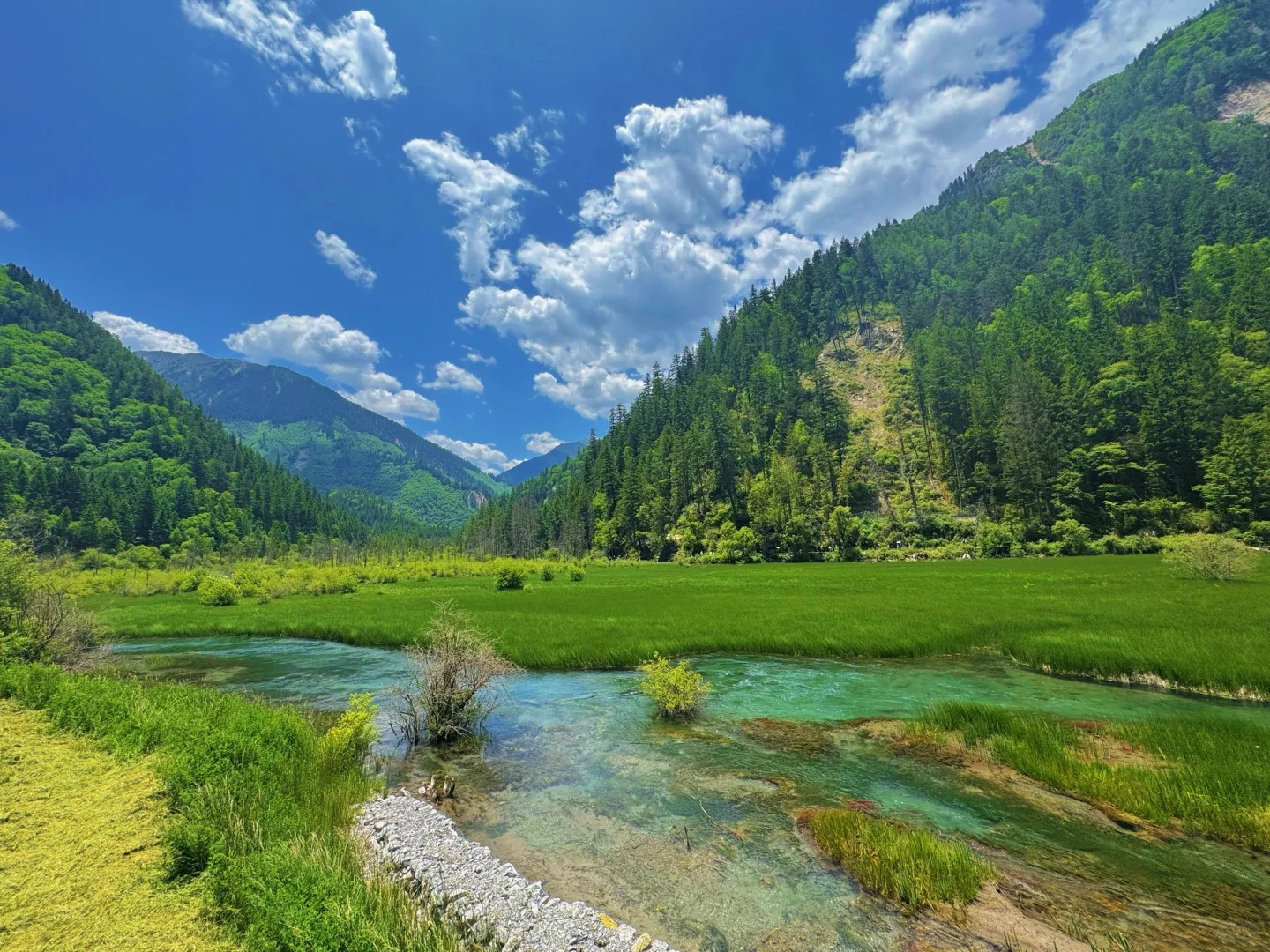
Jiuzhaigou - the name means "Nine Villages Valley" - is the place Chinese travelers call a fairy tale on earth, and for once the cliché is accurate. Set high in the mountains of northern Sichuan, this UNESCO World Heritage park stacks turquoise lakes, terraced travertine waterfalls, snow peaks and Tibetan villages into one of the most photogenic valleys on the planet. For foreign visitors the practical question is no longer "should I go" but "how do I plan it properly" - tickets sell out in peak season, the park runs on a fixed shuttle system, and altitude and mountain weather demand respect. This 2026 guide walks you through every step.
Why Visit Jiuzhaigou
Few landscapes photograph like Jiuzhaigou's, and the water is the star: lakes glow in shades of turquoise, emerald and sapphire, colored by mineral-rich glacial meltwater and travertine deposits. Add autumn's gold-and-crimson forests, winter's frozen waterfalls and spring's alpine blossoms, and you get a valley that changes costume with every season.
- UNESCO World Heritage: inscribed as a natural site in 1992, together with nearby Huanglong.
- Three valleys in a Y shape: Shuzheng, Rize and Zechawa, each with its own character.
- More than 100 named lakes linked by waterfalls and forest boardwalks - most of them a shade of blue you have not seen before.
Best Time to Visit in 2026
- Autumn (late September to mid-October): the famous golden season - fall colors peak, skies are clear and the photos are unreal. Book hotels and tickets far in advance.
- Summer (June to August): lush and green with waterfalls at full power; cooler than Chengdu but busy with domestic tourists.
- Winter (December to March): the quietest and cheapest season - frozen lakes, icicle waterfalls and temperatures well below freezing.
- Spring (April to May): snowmelt refills the lakes and flowers bloom, but the weather is changeable.
If you can only come once, aim for early to mid-October - but avoid the National Day holiday (October 1-7), when the park hits its daily visitor cap. Late September is the sweet spot.
How to Get to Jiuzhaigou from Chengdu
Most foreign travelers start in Chengdu, Sichuan's capital - see our Chengdu travel guide for the city itself. Then choose your route:
- High-speed rail (the smart 2026 option): the Chengdu-to-Huanglong-Jiuzhai railway has cut the trip from a full day of mountain driving to a few hours. From the station, shuttle buses run to the park area (roughly a two-hour ride). Book train tickets early - our high-speed rail guide covers booking and riding basics.
- Flight: Jiuzhai Huanglong Airport (JZH) sits at about 3,400 meters; flights from Chengdu take around an hour but are often delayed by mountain weather, and a scenic two-hour transfer follows.
- Bus or private car: roughly 8-10 hours from Chengdu over dramatic mountain roads; a private driver is the comfortable but pricey option.
Park Basics: Tickets, Shuttle and Rules
- Book online in advance: Jiuzhaigou caps daily visitors, especially in autumn. Buy tickets through official channels using your passport details - walk-up tickets are not a reliable plan.
- Entry plus mandatory shuttle: the valley is long, so everyone rides the eco-shuttle buses that run along the Y-shaped route. Budget roughly ¥260 per person for ticket plus shuttle in peak season - official rates change, so confirm before booking.
- Passport required: foreign visitors need their passport for booking and ticket collection.
- No overnight stays inside the park: everyone exits in the evening; accommodation is in Zhangzha town at the gate.
Top Sights in the Three Valleys
The smart, crowd-avoiding strategy: take the shuttle to the head of each valley, then walk downhill on the boardwalks.
Rize Valley
- Five Flower Lake: the park's most famous lake - impossibly blue water, submerged tree trunks and autumn color on every shore. Do not miss the elevated viewing platform.
- Pearl Shoal and Pearl Shoal Waterfall: a wide shallow travertine slope feeding a curtain-like waterfall - a scene from the classic 1986 TV series Journey to the West was filmed here.
- Mirror Lake: perfectly still in the early morning, reflecting the peaks like an actual mirror.
Zechawa Valley
- Long Lake: the largest and deepest lake in the park, cradled by snow peaks at about 3,100 meters - the highest point most visitors reach.
- Five-Color Pond: small but jewel-bright, its layered turquoise water shifting as you move around it.
Shuzheng Valley
- Nuorilang Waterfall: at the junction of the three valleys - one of China's widest high-altitude travertine waterfalls, spectacular in summer flow and in winter ice.
- Shuzheng Lakes and the Tibetan villages: terraced lake chains beside traditional houses - the settlements that give the park its name.
Sample One-Day Route
- Enter early and take the shuttle straight to Rize Valley; walk downhill from Five Flower Lake past Pearl Shoal.
- Shuttle to Zechawa Valley for Long Lake and Five-Color Pond.
- Lunch at the Nuorilang service center, where the Y branches meet.
- Spend the afternoon riding down Shuzheng Valley, hopping off at the lake stops and walking the boardwalk sections between them.
- Catch the last shuttle out and relax in Zhangzha town.
Have a second day? Revisit the sights you rushed, or pair Jiuzhaigou with Huanglong ("Yellow Dragon") - a nearby valley of golden travertine pools about two hours away. Many itineraries combine the two parks.
Where to Stay
- Zhangzha town at the park gate is the only practical base - hotels, restaurants and night markets within walking distance of the entrance.
- Book weeks ahead for autumn; prices spike around National Day.
- Pay with Alipay or WeChat Pay everywhere in town - set them up with our Alipay guide and WeChat Pay guide, stay connected with an eSIM, and never travel in China without proper travel insurance.
Practical Tips for Foreign Travelers
- Altitude: the valley floor sits around 2,000 meters and Long Lake around 3,100. Most visitors feel fine, but go slowly, skip alcohol and carry water. The airport at 3,400 meters is where altitude can actually hit.
- Weather: cool even in summer and near-freezing in winter; pack layers, sun protection and rain gear - our China packing list is a good starting point.
- Food: Tibetan-style yak dishes, hotpot and noodles in Zhangzha town, plus basic meals at the Nuorilang service center inside the park.
- Leave no trace: stay on the boardwalks, no swimming, no feeding wildlife - and drones are banned in the park.
Jiuzhaigou rewards a little planning: book the rail ticket, reserve the park online, arrive early, and let the valley do the rest. It is the rare sight that looks better in person than in the photos - and the photos are already extraordinary.