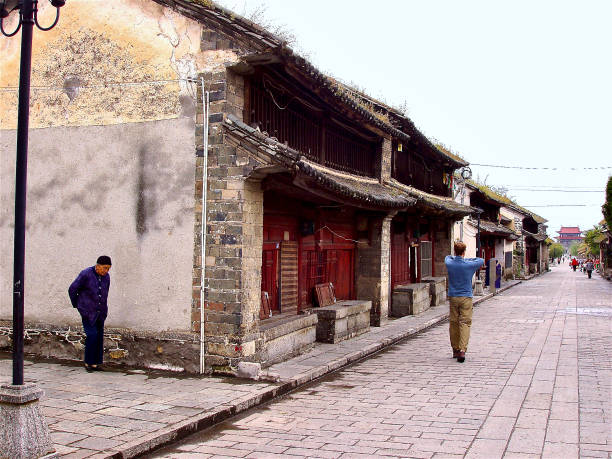
Lijiang is the kind of place that makes people extend their trip. A UNESCO World Heritage old town of cobbled lanes, willow-lined canals and wooden Naxi courtyard houses sits at 2,400 metres in northwestern Yunnan, with a 5,596-metre snow mountain filling the skyline to the north. It is one of the most atmospheric towns in China, and once you get past the busiest lanes it is also one of the most rewarding places to slow down for three or four days.
This guide is written for foreign travelers: how to get there, where to stay, what to see in the old town, how to plan a Jade Dragon Snow Mountain day without wasting money, day trips to Tiger Leaping Gorge and Baisha, what to eat, the best months to visit, and a simple three-day plan.
What Lijiang actually is (and where)
Lijiang (丽江) is a small prefecture-level city in Yunnan, roughly 500 km northwest of Kunming and about 180 km north of Dali. It has three parts that matter to visitors:
- Dayan Old Town — the famous "Lijiang Old Town," a dense grid of stone lanes, canals and guesthouses. Car-free, and genuinely confusing to navigate at first.
- Shuhe Ancient Town — a smaller, quieter version of Dayan about 4 km northwest, on the old Tea Horse Road. Better for people who want mornings without tour groups.
- The new town — modern Lijiang, where locals live, work and eat cheaply. Useful for supermarkets, pharmacies, hospitals and buses.
The Naxi people are the cultural heart of Lijiang, and their Dongba script is often described as the only pictographic writing system still in use. You will see it painted on shops, carved into wooden signs and printed on souvenirs — it is not decoration, and the small museums do a good job of explaining it.
Getting to Lijiang
By air
Lijiang Sanyi International Airport (LJG) is about 30 km south of the old town, with direct flights from Kunming, Chengdu, Chongqing, Shanghai, Beijing, Guangzhou and Shenzhen, plus some seasonal international links. From arrivals, an airport shuttle bus runs to the city and the old town area; taxis and ride-hailing (Didi works normally here) take roughly 40–50 minutes depending on traffic.
By train — usually the best option
The Kunming–Dali–Lijiang railway makes Lijiang easy to reach without flying. Journey times are roughly:
- Kunming → Lijiang: about 3.5–4.5 hours
- Dali → Lijiang: about 2 hours
- Shangri-La → Lijiang: about 2 hours on the newer line
Book on the official 12306 app or website with your passport — foreign passports work for both online booking and ticket collection. Lijiang railway station is in the new town, a short taxi or bus ride from Dayan; note that the old town is pedestrian-only, so the last few hundred metres will be on foot with your bags over cobblestones. Pack light or use a bag with wheels you can lift.
Where to stay
Most foreign travelers stay in or near the old towns. A few honest trade-offs:
- Dayan Old Town — maximum atmosphere, walkable to everything, but the central lanes can be noisy until late and you will haul luggage over stone. Choose a courtyard guesthouse a few lanes off the main drag.
- Shuhe — quieter, still charming, cheaper for the same standard, 15–20 minutes by taxi or bike from Dayan.
- New town — best value and easiest for early train departures, but you lose the atmosphere.
Courtyard guesthouses ("客栈") are the signature Lijiang stay: a walled compound with a plant-filled courtyard, usually run by a family, often with English-speaking staff in the old town belt. Prices swing hard with season — quiet weeks in winter can be half the rate of a Golden Week night.
The Old Town: what to actually do
Dayan rewards wandering, but these are the anchors:
- Water Wheels and Sifang Street (Square Street) — the old town's symbolic entrance and its historic market square. Busiest in the evening, when the lanes fill for food and photos.
- Wangu Tower — on Lions Hill above the old town; the classic rooftop view over thousands of tiled roofs with Jade Dragon Snow Mountain behind them on a clear day.
- Mu Mansion (Mu Fu) — the residence of the hereditary Mu chieftains who ruled this region for centuries. Tells the story of how Lijiang became a Tea Horse Road trading hub.
- Black Dragon Pool Park — a small lake north of the old town with the most photographed reflection of Jade Dragon Snow Mountain in Lijiang. Go early on a clear morning.
- Naxi ancient music halls — evening performances of Taoist-influenced Naxi music by elderly orchestras. Tourist-oriented, but genuinely unusual and worth an hour.
A note on fees: Lijiang has charged an Old Town Maintenance Fee on and off over the years (historically around ¥50 per person), enforced mainly at certain checkpoints such as Black Dragon Pool and the snow mountain area rather than at every old town lane. Rules change; ask your guesthouse what applies on your dates before you buy anything from a tout.
Jade Dragon Snow Mountain (Yulong Xueshan) — plan this one properly
Jade Dragon Snow Mountain is about 35 km north of the old town and the single most popular excursion from Lijiang. It is also the place where most travelers overspend and underestimate the altitude. Three things to understand:
1. Tickets and the cableway choice
Entry ticket plus the cableway are separate, and daily visitor numbers are capped, so tickets are usually booked in advance through official channels or your hotel, with passport details. There are three main cableways:
- Glacier Park cableway — the big one, climbing to roughly 4,500 m with a boardwalk to about 4,680 m. Spectacular, cold, and the most altitude-demanding.
- Spruce Meadow cableway — around 3,200 m, grassy alpine meadow with mountain views. Easier on the body, better for families.
- Yak Meadow cableway — around 3,700 m, quieter, with grazing yaks and forest.
2. Altitude is the real issue, not the cold
Lijiang town is already at 2,400 m. Going from a guesthouse breakfast to a 4,500-metre boardwalk in one morning is a serious jump, and altitude sickness does not care how fit you are. Practical approach: give yourself at least one full day in Lijiang first, do the snow mountain on day two or three, take the climb slowly, drink water, skip alcohol the night before, and buy or rent a can of oxygen in town (cheaper than on the mountain). If you feel a bad headache, nausea or breathlessness that does not ease at rest, go down — that is the treatment.
3. Combine it with Blue Moon Valley
At the foot of the mountain, Blue Moon Valley (蓝月谷) is a series of terraced pools that really are that milky turquoise, fed by glacial melt. It is included with the mountain ticket and reached by the park's shuttle buses. Most people see it on the way down. Also check out the small Impression Lijiang outdoor show if you want a big-scale performance against the mountain backdrop — it is touristy, but the setting is hard to beat.
Day trips from Lijiang
Tiger Leaping Gorge
About 1.5–2 hours' drive north, Tiger Leaping Gorge is one of the deepest river gorges in the world, with the Jinsha River thundering between 3,000-metre-plus cliffs. Two ways to do it:
- Day trip — drive up, walk the lower viewing paths and stairs to the river, drive back. Doable in a day; expect a lot of steps.
- Classic two-day High Trail trek — roughly 22 km along the upper path with guesthouses like Naxi Family and Halfway House overnight. One of China's best short treks. Bring layers, cash, and expect basic accommodation.
Baisha Village
Baisha (白沙), around 8 km north of Dayan, was the early Naxi capital and is far quieter than the main old town. Its highlight is a set of Ming-dynasty murals blending Tibetan, Han and Naxi styles, plus village life that still feels lived-in rather than staged. Easy by bike or taxi, and a good half-day trip.
Yuhu Village and the Rock Joseph memorial
Yuhu is a stone village at the foot of the snow mountain, notable for the former home of botanist and explorer Joseph Rock, whose writings and photographs introduced this region to the West. Combine it with the mountain trip.
What to eat in Lijiang
- Cured pork rib hotpot (腊排骨火锅) — the local signature: salted, air-dried ribs simmered with vegetables and eaten with a dipping sauce.
- Naxi baba (丽江粑粑) — a flaky layered flatbread, sweet or savoury, good for breakfast on the go.
- Chickpea jelly (鸡豆凉粉) — cool, slightly nutty jelly served fried or cold with chilli and vinegar.
- Wild mushroom hotpot — Yunnan's famous wild mushrooms peak in the rainy season (roughly July–September). Eat them cooked, at a reputable restaurant, never raw.
- Yak meat dishes — grilled skewers, jerky and hotpot versions are everywhere; quality varies, so follow the crowds of locals.
Note that old town restaurants are priced for visitors. Walk ten minutes into the new town and the same dishes cost noticeably less.
Best time to visit
- October–November — arguably the best window: dry, clear, comfortable days, snow on the peaks, autumn colour in the surrounding hills.
- March–May — mild and flowery, though spring can bring wind and haze.
- June–August — the rainy season. Cloud can hide the mountain entirely, but this is mushroom season and the landscape is green and lush.
- December–February — cold nights, the fewest crowds and often the clearest mountain views of the year.
Avoid the first week of October (National Day Golden Week) and Chinese New Year if you value quiet — the old town becomes extremely crowded and hotel prices spike.
A simple three-day Lijiang itinerary
| Day | Plan |
|---|---|
| Day 1 | Arrive and acclimatise. Old town orientation walk, Wangu Tower for sunset, Naxi music in the evening. |
| Day 2 | Jade Dragon Snow Mountain: Glacier Park or Spruce Meadow cableway, then Blue Moon Valley on the way down. Early start, layered clothing, oxygen can in your bag. |
| Day 3 | Morning at Black Dragon Pool, then Baisha Village and Shuhe on the way back. Or swap in a Tiger Leaping Gorge day trip if you have the legs for it. |
Practical tips for foreign travelers
- Cash vs phone payment — Alipay and WeChat Pay both support foreign cards now, and most shops in the old town accept them. Still carry some cash (¥200–300) for small village stalls, buses and trek guesthouses.
- Passport — needed for train tickets, mountain tickets and hotel registration. Carry it, or a clear photo plus your hotel's registration slip if you must travel light.
- Altitude — expect mild breathlessness on stairs even in town. Take the first day easy, and do not plan a 4,500-metre cableway for your arrival day.
- Weather — UV is strong at this elevation even when it is cloudy; bring sunscreen and sunglasses. Rain gear in summer, a proper jacket in winter.
- Getting around — Didi works in Lijiang and is cheap. For the old towns, your feet are the best transport, and taxis cannot enter the pedestrian lanes.
- Language — English is common in guesthouses and tourist restaurants, less so elsewhere. A translation app plus a screenshot of your hotel's Chinese name and address solves almost everything.
- Pace — Lijiang's charm is in its side lanes, teahouses and courtyards. If you are racing between photo spots, you are doing it wrong.
Lijiang works best as a slower stop in a Yunnan route: fly or train in from Kunming, spend three or four days between Dayan, Shuhe and the snow mountain, then continue north to Shangri-La or south to Dali. Give it the time, respect the altitude, and it will be one of the highlights of your trip to China.