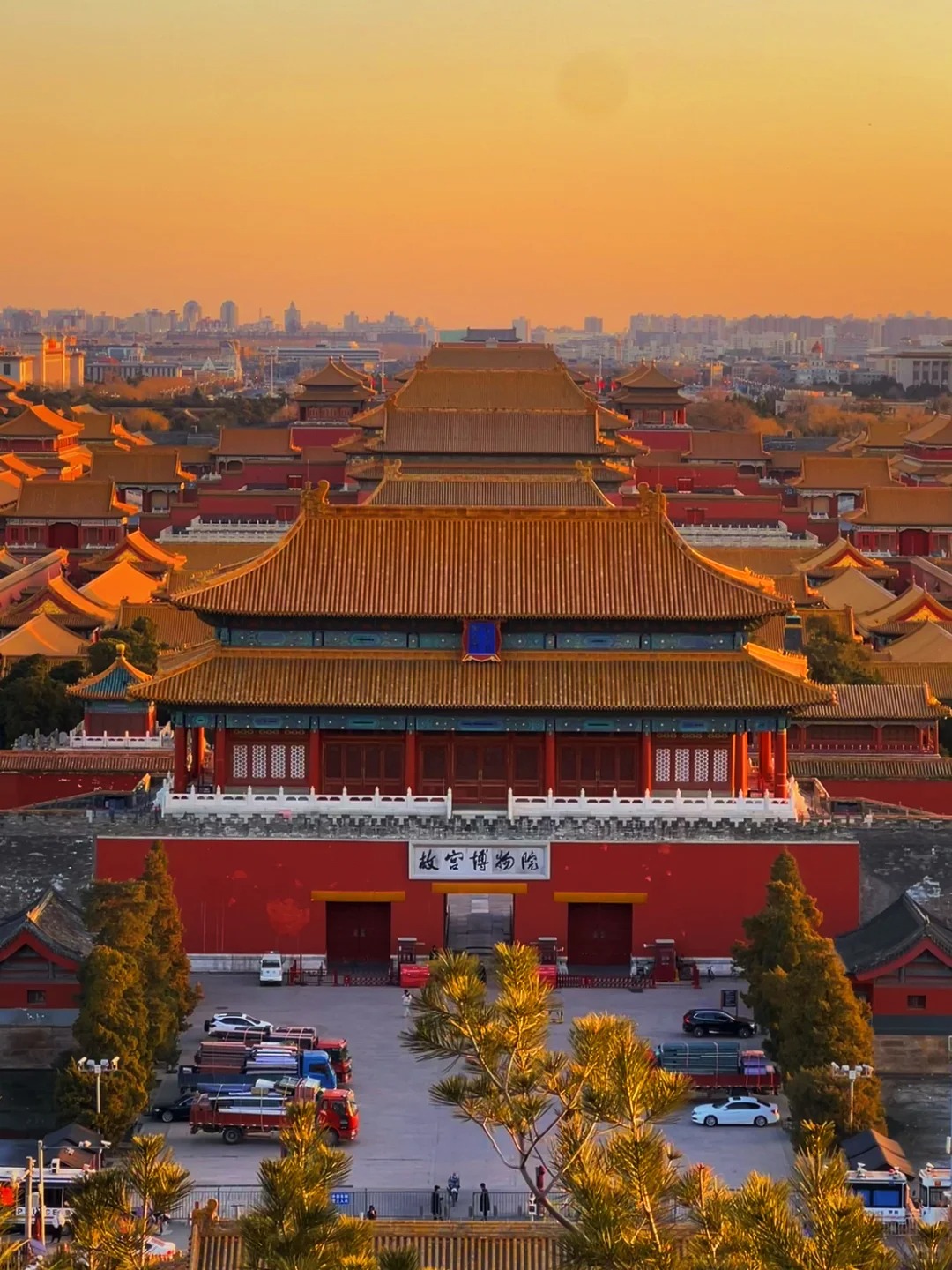
China's autumn holiday season is the busiest travel window of the year, and in 2026 it arrives in two waves: the Mid-Autumn Festival on Friday, 25 September, and National Day Golden Week from 1 to 7 October. Between them they move hundreds of millions of people around the country. If you are a foreign traveler planning a late-September or early-October trip, this guide explains what is happening, what it does to your bookings, and how to enjoy the season instead of fighting it.
The 2026 dates at a glance
- Mid-Autumn Festival: Friday, 25 September 2026 (the 15th day of the 8th lunar month). The statutory holiday runs 25-27 September.
- National Day: 1 October, with the Golden Week holiday running 1-7 October.
- The gap: 28-30 September are ordinary working days, so prices and seat availability relax slightly between the two surges. That gap is the smartest window to travel if your dates are flexible.
Both holidays are family holidays first and tourism holidays second. Trains and flights sell out weeks ahead, hotels in popular cities charge peak rates, and the biggest attractions run timed-entry reservations that can be gone days in advance.
What the Mid-Autumn Festival actually is
Mid-Autumn is the quieter, warmer of the two holidays. Families gather in the evening, eat mooncakes - dense pastries filled with lotus seed paste, red bean or salted egg yolk - and look at the full moon. It is a reunion festival, a little like a Chinese Thanksgiving, and it is genuinely lovely to be in the country for it.
What you can actually do as a visitor:
- Eat mooncakes. Every supermarket and bakery sells boxes in the weeks before. Buy one or two loose cakes rather than a gift box - the packaging costs more than the pastry.
- Watch the lanterns. Parks, temples and old towns in Suzhou, Hangzhou, Nanjing, Xi'an and Pingyao hang lantern displays; river towns such as Wuzhen and Zhouzhuang are at their prettiest.
- Join a moon-viewing spot. West Lake in Hangzhou, the Bund in Shanghai, and the city walls of Xi'an and Nanjing are the classic places. Locals go after dark, so go late rather than early.
- Expect the festival itself to be low-key commercially. Shops stay open, but many small restaurants close for family dinner on the evening of the 25th.
Then Golden Week arrives
National Day marks the founding of the People's Republic on 1 October 1949. The seven-day break that follows has been a fixture since 1999, and it is the single largest domestic travel event on Earth. Attractions that are calm on 29 September can be shoulder-to-shoulder on 2 October.
What that means in practice:
- Book transport first, everything else second. Once your train or flight is locked, build the rest around it.
- Reserve attractions the moment your dates are fixed. The Forbidden City, Terracotta Warriors, Zhangjiajie, Jiuzhaigou and Huangshan all cap daily visitors and release slots on fixed schedules.
- Rethink 1-3 October in the obvious places. Beijing, Shanghai, Xi'an, Chengdu and Chongqing absorb enormous crowds in the first three days. Either accept it, or go somewhere else.
- Use the tail of the holiday. 6-7 October is noticeably calmer than 2-4 October, and the days immediately after Golden Week are one of the best-value windows of the whole year.
How to book trains and flights
High-speed rail is still the best way to move around China, and it is also the first thing to sell out. Tickets go on sale on a rolling window roughly two weeks before departure - check the current presale period in the 12306 app, because it changes - and holiday departures vanish within minutes of opening.
- Use 12306 directly. The official app has an English interface and accepts foreign passports. Register and complete identity verification well before you need to buy.
- Use the waitlist. If your train is full, 12306's waitlist function often clears as other passengers refund. It is far more reliable than it sounds.
- Set an alarm for the release time. Popular routes such as Beijing-Shanghai, Shanghai-Hangzhou and Guangzhou-Shenzhen are gone almost instantly on holiday release days.
- For flights, book earlier than you think. Domestic fares during Golden Week climb steadily for weeks, and the cheap seats are the first to disappear.
- Keep a fallback. If a route is impossible, look at a neighbouring city plus a short high-speed rail hop instead of a sold-out direct flight.
Where to go - and where the crowds go
The trick is not avoiding the holidays but choosing places that absorb crowds well, or places the domestic market has not fully discovered yet.
- Better in a crowd: Shanghai and Beijing are big enough to spread people out; Hangzhou, Suzhou and Nanjing handle holiday traffic well because their sights are dispersed.
- Nature over monuments: Xinjiang, Gansu, Qinghai, Guizhou and Yunnan reward travellers who want space. Book transport early - these regions are exactly where domestic travellers now go.
- Smaller cities, big payoff: Quanzhou, Kaiping, Shaoxing, Yangzhou and Datong are rich in history with a fraction of the crowds of the headline destinations.
- Worst-case combinations: Zhangjiajie, Huangshan, Jiuzhaigou and the Forbidden City on 2-4 October. Beautiful places, punishing crowds.
Practical reminders for foreign visitors
- Payments: Set up Alipay or WeChat Pay with an international card before you fly. Almost everything, from metro gates to street stalls, is QR-based.
- Connectivity: A travel eSIM or a local SIM with data keeps maps, translation and ride-hailing working. Hotel Wi-Fi is fine but not reliable on the move.
- Ride-hailing: Didi covers essentially every city and has an English interface. It is far easier than explaining addresses to a taxi driver during a holiday surge.
- Visa: China's visa-free and visa-free transit policies have expanded repeatedly in recent years. Check the current rules for your passport before booking, since eligibility and duration differ by nationality.
- Hotels: Confirm in writing that your hotel registers foreign guests. This is rarely a problem in major cities and chains, but it is worth checking in smaller towns.
A workable ten-day plan
One route that handles the holiday well: land in Shanghai in the 28-30 September gap, spend two days there, take the high-speed train to Hangzhou for West Lake and Longjing tea country, then move west to Nanjing or Suzhou for the canal towns. When Golden Week begins on 1 October you are already deep in the Yangtze Delta, where short rail hops and dispersed sights keep the crowds manageable.
If you want nature instead, fly to Urumqi or Kunming before 1 October and spend the week in Xinjiang or Yunnan. Book the internal flights and trains the moment they open.
The bottom line
The Mid-Autumn Festival and Golden Week are not a reason to avoid China - they are the best window to see the country at its most celebratory. Do the bookings first, keep your itinerary loose around the 1-3 October peak, and treat the days on either side of the holidays as the real prize. Travellers who plan around the calendar rather than against it have a much better trip.