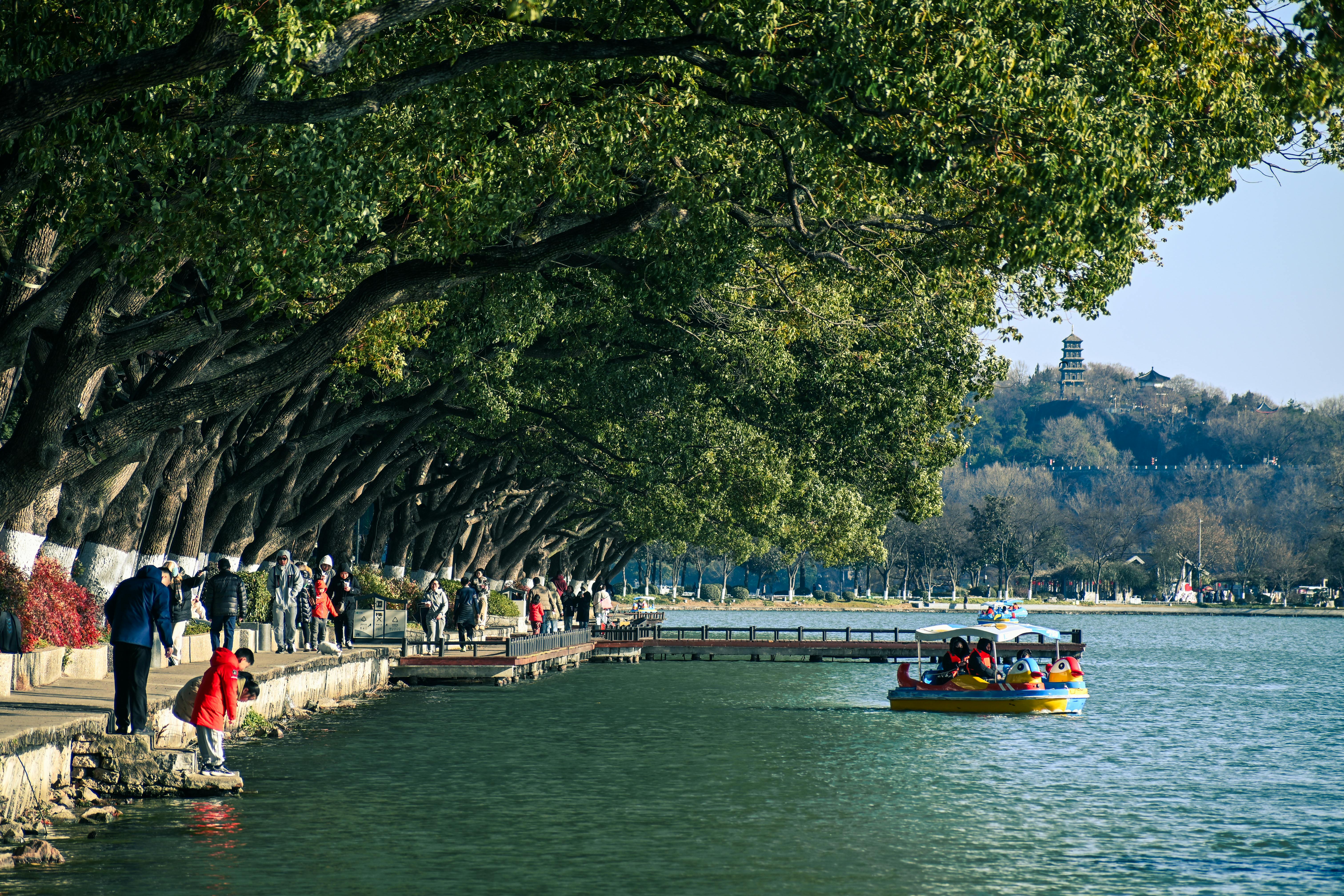
Nanjing — the name literally means "Southern Capital" — has served as the capital of China under no fewer than ten dynasties and regimes, most famously the Ming Dynasty (1368–1644). For foreign travelers who want history without the crowds of Beijing or the price tag of Shanghai, Nanjing delivers: the Ming Xiaoling Mausoleum, the best-preserved ancient city wall in the world, tree-lined boulevards of French plane trees, and some of China's most beloved street food. And it is just 75 minutes from Shanghai by high-speed rail, making it an easy add-on to any China itinerary.
This 2026 guide tells you everything you need to plan the trip: how to get there, what to see, where to eat, how to pay, and a practical 2-day route.
Why Visit Nanjing in 2026
Most first-time visitors to China stick to the Beijing–Xi'an–Shanghai triangle. Nanjing offers a different, deeper slice of Chinese history:
- Ming Dynasty heritage: The Ming Xiaoling Mausoleum, tomb of the dynasty's founder Zhu Yuanzhang, is a UNESCO World Heritage Site and the largest imperial tomb in China.
- Ancient city wall: At 35 kilometers, Nanjing's Ming city wall is the longest and best-preserved ancient city wall on earth. You can walk or cycle along restored sections.
- Modern history: The Presidential Palace and Sun Yat-sen Mausoleum tell the story of China's 1911 revolution and early republic.
- Liveable scale: Nanjing feels calmer and greener than Shanghai — a genuine Chinese metropolis with local character.
How to Get to Nanjing
By High-Speed Rail (Best Option)
Nanjing South Station (南京南站) is a major hub on the Beijing–Shanghai high-speed line. From Shanghai Hongqiao, trains run roughly every 10–15 minutes and take about 75 minutes (second class around ¥135–150). From Beijing South it takes about 3.5 hours; from Hangzhou about 1 hour. See our complete high-speed rail guide for booking tips — you can buy tickets with a passport at the station, on the official app, or via agents like Trip.com.
By Air
Nanjing Lukou International Airport (NKG) has direct flights from many Asian cities and domestic hubs. From the airport, the S1 metro line reaches the city center in about 40–50 minutes.
Getting Around the City
Nanjing has a modern metro system with 12+ lines — buy tickets with Alipay or WeChat Pay, or use a transport card. Taxis are cheap, and Didi ride-hailing works well if you prefer door-to-door (see our Didi guide). Most top attractions sit on Lines 1, 2, and 3, so the metro covers nearly everything.
Top Things to Do in Nanjing
1. Ming Xiaoling Mausoleum (明孝陵)
The centerpiece of the UNESCO-listed Scenic Area around the Purple Mountain. Walk the Sacred Way lined with giant stone animals and officials — one of the most atmospheric sights in China. Combine it with nearby Sun Yat-sen Mausoleum (free) for a full day on Purple Mountain. Allow 3–4 hours.
2. Nanjing City Wall & Zhonghua Gate (中华门)
Zhonghua Gate is the largest city gate ever built in China. Climb the ramparts for sweeping views and visit the small museum inside. The section near Xuanwu Lake is the most scenic for a walk or bike ride at sunset.
3. Confucius Temple & Qinhuai River (夫子庙秦淮河)
Nanjing's most famous night spot: lantern-lit pavilions, canal boats, and hundreds of snack stalls along the Qinhuai River. Come after dark, take a short boat ride, and eat your way through the alleys. Yes, it is touristy — it is still worth one evening.
4. Presidential Palace (总统府)
A sprawling complex that served as the seat of government from the Ming Dynasty to the Republic of China era. Fascinating layers of Chinese political history, with excellent English signage. Allow 2–3 hours.
5. Nanjing Museum (南京博物院)
One of China's top three museums, free to enter (book a same-day slot with your passport via the official WeChat mini-program). The Ming and Qing porcelain halls are unmissable.
What to Eat in Nanjing
Nanjing is one of China's great food cities. Must-tries:
- Duck blood and vermicelli soup (鸭血粉丝汤) — the city's signature dish.
- Salty duck (盐水鸭) — cured duck, served cold; buy from famous shops like 韩复兴.
- Soup dumplings (汤包) — juicy, soupy, and everywhere.
- Tangbao and jianbing breakfasts from street stalls near any metro station.
Paying is easy: nearly every stall accepts Alipay or WeChat Pay — see our setup guides if you have not linked your international card yet. Carry a little cash as a backup for tiny vendors.
Where to Stay
For first-timers, stay around Xinjiekou (新街口) — Nanjing's central business district with metro access in every direction — or near Confucius Temple for atmosphere. Budget options start around ¥200–300; mid-range international and local hotels run ¥400–700 per night. Book through Ctrip or Booking.com as covered in our hotel guide.
Sample 2-Day Nanjing Itinerary
Day 1: Morning at Ming Xiaoling Mausoleum and Sun Yat-sen Mausoleum → lunch of duck blood soup → afternoon at Nanjing Museum → evening at Confucius Temple with a Qinhuai River boat ride.
Day 2: Morning at the Presidential Palace → walk the city wall near Xuanwu Lake → lunch of salted duck → afternoon shopping or a visit to the old Republic-era quarter near the university → evening high-speed rail back to Shanghai or onward to Hangzhou or Suzhou.
Practical Tips
- Best time to visit: March–May and September–November for mild weather; autumn (October–November) adds golden plane-tree avenues and is arguably the prettiest season.
- Language: English signage at major sights is good; download a translation app and keep hotel names written in Chinese.
- Connectivity: Stay online with an eSIM — see our connectivity guide.
- Respect: Ming Xiaoling and Sun Yat-sen Mausoleum are solemn sites — no loud behavior, follow marked paths.
- Budget: A comfortable day in Nanjing (transport, food, one or two paid sights) runs roughly ¥200–350 per person.
Nanjing is the city where China's imperial past and modern present sit side by side — and it is one of the easiest, most rewarding day-trip or weekend destinations in eastern China. Pair it with Shanghai, Hangzhou, or Suzhou, and you have a classic Yangtze Delta itinerary that most tourists still miss.