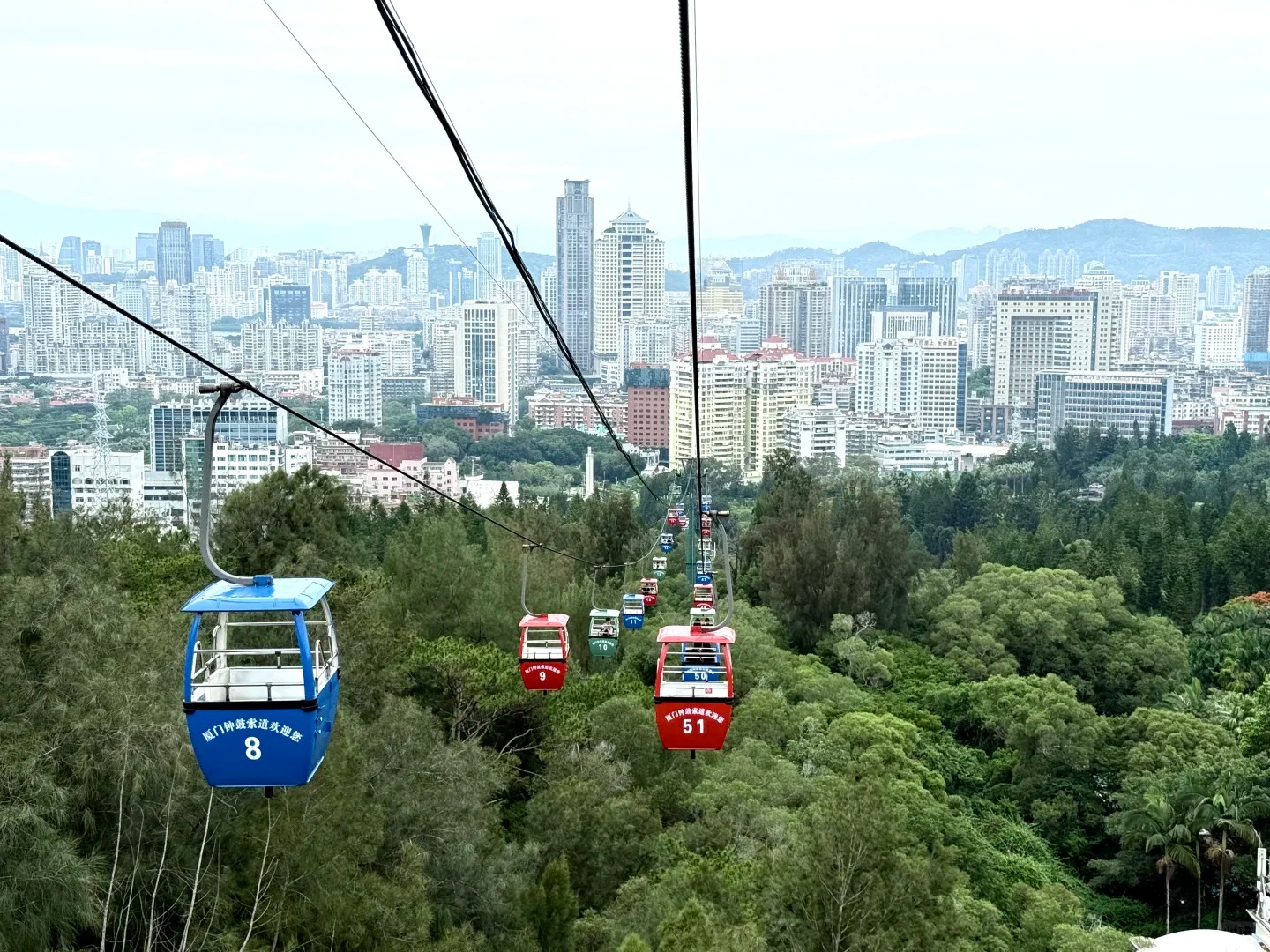
Xiamen (厦门) is the rare Chinese city that feels like a seaside holiday town rather than a mega-metropolis. Set on an island off the coast of Fujian province, it pairs a car-free UNESCO World Heritage islet, colonial-era arcades, and one of China's most famous seafood scenes with a genuinely relaxed pace of life. For foreign travelers, it is also one of the easiest cities in China to visit on your own: compact, walkable, English-friendly, and reachable by high-speed rail from most major hubs.
This 2026 guide covers how to get there, the essential ferry logistics for Gulangyu Island, the best food streets and markets, where to stay, and a practical two-day itinerary.
Why Visit Xiamen in 2026
Xiamen is nicknamed the 'Garden on the Sea' — a subtropical island city where palm trees line the coast and the sea breeze follows you everywhere. It has a mild climate year-round (winters are warm by Chinese standards), a famous university campus you can actually stroll through, and a historic center that mixes Southern Min (Minnan) culture with century-old colonial architecture. It is also the launch point for day trips to the Fujian Tulou, the giant earthen Hakka fortresses now on the UNESCO list.
If you are pairing cities on a longer trip, Xiamen slots naturally between Hong Kong/Shenzhen and the Yangtze Delta — or as a standalone beach-and-food long weekend.
How to Get to Xiamen
By high-speed rail (recommended): Xiamen Railway Station (厦门站) and Xiamen North Station (厦门北站) are served by frequent G-trains. From Shenzhen ~3h, Hangzhou ~4h, Shanghai ~4.5–5h, and Fuzhou just ~1.5h. Book tickets on the official 12306 app or via your hotel's concierge — our complete high-speed rail guide walks through booking, passports and station navigation.
By air: Xiamen Gaoqi International Airport (XMN) has direct flights from Singapore, Kuala Lumpur, Tokyo, Seoul, Bangkok, Sydney and many other cities, plus frequent domestic connections. The airport is on the island, about 30 minutes by taxi or metro Line 1 from downtown.
Getting around: The city is on an island, so distances are short. Use the metro (Lines 1 and 2 cover the airport, train stations and core areas), Didi ride-hailing (see our Didi guide), or simply walk — the old town is very walkable.
Top Things to Do in Xiamen
1. Gulangyu Island (鼓浪屿) — the Car-Free UNESCO Islet
The centerpiece of any Xiamen trip. Gulangyu is a pedestrian-only island 10 minutes by ferry from downtown, famous for its villa-lined lanes, piano heritage, and complete absence of cars and scooters. Book the ferry online in advance (foreigners can book with a passport on the official WeChat mini-program or at the ticket office; the tourist route departs from Xiamen International Cruise Center and arrives at Sanyouqiu Pier). Buy a round-trip ticket and allow a half-day — morning arrival beats the midday crowds. Highlights: Sunlight Rock (日光岩) viewpoint, the Shuzhuang Garden (菽庄花园) piano museum, and simply wandering the shaded lanes.
2. Nanputuo Temple & Xiamen University
Nanputuo Temple (南普陀寺), set against the Wulao Mountain, is one of China's most important Buddhist temples in the south — free to enter, and famous for its vegetarian restaurant. Right next door is Xiamen University, widely rated one of China's most beautiful campuses, with a palm-lined avenue leading to a beach at its back gate. Visitors may enter with a passport on most days (reserve via the university's official channel when possible).
3. Island Ring Road & the Beaches
The Huandao Road (环岛路) hugs the southeast coast for over 40 km. Rent a bike or e-bike and ride the stretch past Baicheng Beach and the Evergreen Bridge — this is Xiamen's postcard view. Evenings are best, when the sea breeze cools the air and locals fill the boardwalk.
4. Zhongshan Road & the Old Town Arcades
Zhongshan Road (中山路) is the old-town spine, lined with early-20th-century arcaded shopfronts (qilou). By day it is a shopping street; by night it turns into a pedestrian food walk. Branch off into the grid of lanes around Baguo Road and Siming South Road for the atmospheric older quarter.
What to Eat in Xiamen
Xiamen's food scene is one of the best reasons to come. Must-tries:
• Shacha noodles (沙茶面) — springy noodles in a rich, peanut-sesame-chili broth; add seafood or pork at the counter.
• Oyster omelet (海蛎煎) — crispy-edged, served with a sweet chili sauce.
• Peanut soup (花生汤) — a sweet, silky breakfast classic.
• Fried oysters, satay skewers and taro cake from street stalls.
• Seafood dinner at the Eighth Market (第八市场), where you pick live fish, crabs and clams and have them cooked on the spot by neighboring restaurants.
For payment, set up Alipay or WeChat Pay before you go — most market stalls and small eateries are cashless. A local eSIM keeps your maps and translation working.
Where to Stay
Old town / Zhongshan Road: best for first-timers — walkable to the ferry, food streets and nightlife. Near the cruise center (Dongdu): convenient for the early Gulangyu ferry. Huandao Road seafront: resort-style hotels with sea views, ideal for a relaxed final night. Booking via Ctrip or Booking.com works fine with a foreign passport.
Sample 2-Day Xiamen Itinerary
Day 1: Morning ferry to Gulangyu Island (half-day) → lunch at a Gulangyu seafood restaurant → afternoon at Nanputuo Temple and Xiamen University → evening food crawl on Zhongshan Road.
Day 2: Morning bike ride along Huandao Road → seafood lunch at the Eighth Market → afternoon in the old town lanes or a Tulou day trip (book a small-group tour; the round trip takes a full day) → sunset at Baicheng Beach.
Practical Tips
• Best time to visit: October–December and March–May are ideal; summer is hot and humid with occasional typhoons (July–September).
• Ferry booking: book Gulangyu tickets a day ahead in peak season; bring your passport.
• Language: English is limited outside hotels, so keep a translation app handy.
• Combine with: Suzhou and Hangzhou for a classic Yangtze Delta loop, or Shenzhen/Hong Kong for a coastal itinerary.
Xiamen rewards slow travelers: fewer checklists, more sea breeze, and some of the best casual seafood in China. Start with the ferry to Gulangyu — the rest will take care of itself.