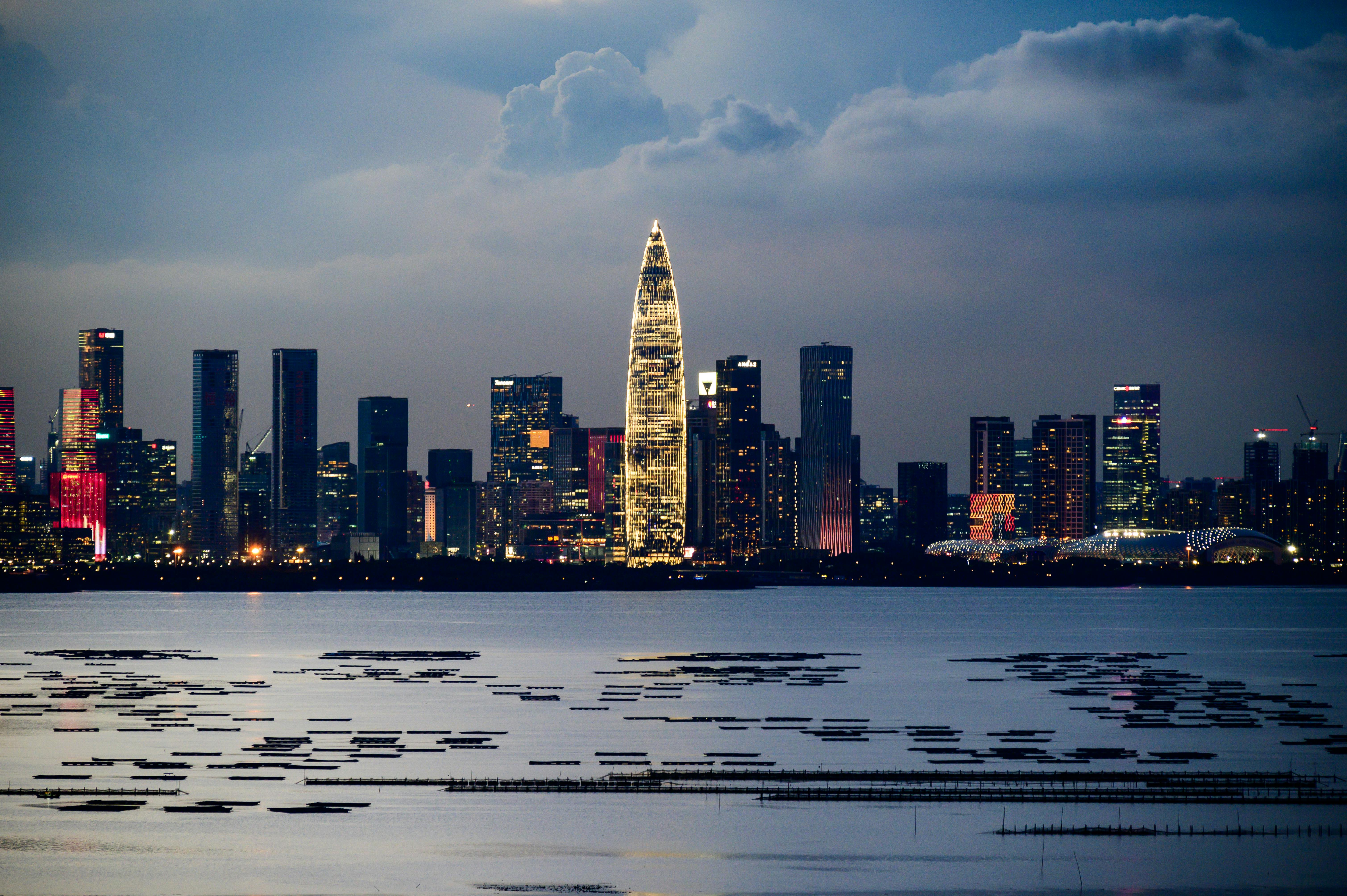
Shenzhen is the Chinese city that should not exist on paper but absolutely does: four decades ago it was fishing villages across the border from Hong Kong; today it is a metropolis of 17 million, home to Huawei, Tencent and DJI, with China's most futuristic skyline. For foreign travelers, Shenzhen is the easiest big city in the country to reach (high-speed rail from Hong Kong takes about 15 minutes), one of the few with real beaches, and a window into where China is headed. This guide covers top attractions, food, transport and a practical route.
Why Visit Shenzhen
- A skyline like nowhere else: the 599-meter Ping An Finance Centre anchors a cluster of supertall towers in Futian that looks best at sunset and after dark.
- The Hong Kong gateway: high-speed trains link Shenzhen's Futian station to Hong Kong West Kowloon in around 15 minutes, and two metro checkpoints connect to the Hong Kong MTR - you can realistically do both cities in one trip.
- City meets coast: unlike most Chinese megacities, Shenzhen has 260 kilometers of coastline, with seaside promenades, islands and surfing beaches within an hour of downtown.
- China's youngest big city: the average age is low, the energy is entrepreneurial, and the food scene pulls in flavors from every province because almost everyone here is from somewhere else.
- Easy first or last stop: with a major airport, direct high-speed rail to Guangzhou and Hong Kong, and simple visa-free transit rules, Shenzhen bookends a longer China trip perfectly.
Best Time to Visit in 2026
Shenzhen has a subtropical monsoon climate, so the best windows are similar to Hong Kong's:
- October to December: the sweet spot - warm, drier air, clear skies and comfortable evenings. Peak season for good reason.
- January to March: mild and mostly pleasant, with occasional cool snaps; winter is the driest season and hotel prices are lower.
- April to June: warm and increasingly humid, with plum-rain showers in May and June - fine for city sights, less ideal for beach days.
- July to September: hot, humid and stormy, with typhoons most likely in August and September.
How to Get to Shenzhen
- By air: Shenzhen Bao'an International Airport (SZX) is a major hub with direct flights from across Asia, Europe and North America, plus its own metro line into the city.
- From Hong Kong: the fastest route is the high-speed rail from Hong Kong West Kowloon to Futian station (~15 minutes). Budget travelers can take the MTR East Rail line to Lo Wu or Lok Ma Chau and walk across the border.
- From Guangzhou and elsewhere: frequent high-speed trains link Guangzhou South to Shenzhen North in about 30 minutes. If you are planning a bigger rail itinerary, our complete China high-speed rail guide walks through booking and riding.
Getting Around
Shenzhen's metro is one of China's best for visitors: more than 16 lines, English signage everywhere, and fares around ¥3-8 per trip. You can pay by scanning Alipay or WeChat Pay at the gates, which also work across metro systems in 50+ Chinese cities. For door-to-door trips, Didi ride-hailing is cheap (short rides often ¥15-30) with an English interface. Taxis are plentiful but confirm the meter runs. Plan by district - Shenzhen's Futian, Luohu, Nanshan and the eastern beaches are different worlds.
Top Attractions
- Ping An Finance Centre (Futian): at 599 meters, one of the world's tallest buildings. The "Free Sky" observation deck on the 116th floor is the best place to grasp the scale of the city - book ahead online for clear days.
- Shenzhen Bay Park: a 13-kilometer waterfront boardwalk with the Futian skyline on one side and Hong Kong's New Territories visible across the bay. Go at sunset; the Shenzhen Bay Park metro stop puts you right at the best stretch.
- OCT Loft (Nanshan): a creative district built from old factory warehouses, filled with galleries, design studios, cafes and weekend markets.
- Window of the World and Splendid China: classic Shenzhen theme parks with miniature landmarks from around the world and across China. Cheesy but fun, especially with kids.
- Dafen Oil Painting Village: an entire village of artists who paint reproductions (and originals) at astonishing speed - watch them work, commission a piece, or buy a small canvas.
- Huaqiangbei electronics market: Asia's most famous electronics bazaar - components, gadgets and phone accessories across several vast malls. Know what you want before you go.
- Dongmen Old Street (Luohu): Shenzhen's original shopping district - pedestrian lanes, snack stalls and bargain fashion.
- Beaches on the Dapeng Peninsula: Dameisha is the easiest big beach from downtown, while Xichong and the Dapeng peninsula farther east offer cleaner water, surf and coastal hikes.
Food: More Than Cantonese
Shenzhen sits in Guangdong, so Cantonese dim sum and fresh seafood are excellent - look for busy neighborhood restaurants serving shrimp dumplings, clay-pot rice and steamed fish. But because Shenzhen is an immigrant city, you will also find some of the best Sichuan hotpot, Hunan stir-fries and northeastern BBQ outside those provinces. For atmosphere, Shekou's Sea World area is the most international dining strip, while Dongmen and Huaqiangbei have lively snack streets. Most restaurants accept Alipay or WeChat Pay; a handful of upscale places still prefer cash, so carry a little.
Suggested 2-Day Route
- Day 1 - Futian and the bay: morning at the Ping An Finance Centre observation deck, afternoon at Shenzhen Bay Park, evening in OCT Loft for dinner.
- Day 2 - Choose your flavor: either a beach day at Dameisha or Dapeng, a culture detour to Dafen Oil Painting Village plus a Huaqiangbei electronics crawl, or a day trip to Hong Kong (leave early, and remember to bring your passport - Hong Kong has separate entry rules from mainland China).
Practical Tips for 2026
- Visa rules: many nationalities can enter Shenzhen under China's visa-free transit policies if they are traveling onward to a third country. Check the latest conditions in our visa-free transit guide and 144-hour transit explainer before booking. Entering or re-entering mainland China from Hong Kong still counts as a new entry, so keep your visa or transit eligibility in mind.
- Payments and connectivity: set up Alipay or WeChat Pay before you arrive and grab an eSIM for China so maps, metro and ride-hailing work from the moment you land. A VPN is usually needed for Google services - see our VPN & eSIM guide.
- Where to stay: Futian is the best base for first-timers (central, near the Hong Kong rail link and the skyline), Luohu suits budget travelers near the border crossing, and Nanshan/Shekou suits longer stays and families. Our hotel booking guide explains how to compare Ctrip, Booking.com and local options.
- Language: Mandarin is the working language (Cantonese is also common), metro signs are bilingual, and younger locals usually speak some English - translation apps cover the rest.
- Budget: Shenzhen is pricier than inland cities but cheaper than Hong Kong or Shanghai: expect roughly ¥400-800 per day for a mid-range hotel, meals and transport. See our China travel budget breakdown for benchmarks.
Pair Shenzhen with Guangzhou (30 minutes away by high-speed rail) for a complete Pearl River Delta trip - the two cities make an easy, well-connected first week in southern China.